7-15.07.2023
DOC!, Paris
_______________________________
That’s when I got the call. I had just finished work and was about to go to bed. I hear his voice saying, “We are on our way. We’ll take the train from Malmö and go through Denmark.” I put my phone down and stared at some black spots on the ceiling, and at the same time, I couldn’t stop thinking about what I once had gone through myself and that today it is their turn.
In this excerpt from his diary, noncitizen member Alireza Naghavi puts into words the shared destiny of many Afghans who have been forced to “illegally” flee Stockholm for Paris to avoid deportation. For a long time, Sweden would, by policy, deport almost all Afghans to the ongoing civil war in the country. In the face of such unjust and lethal border regimes, is there any ethical stance but to become co-conspirators and accomplices – complicit in “crimes” against the state – helping to smuggle, house, and hide people who are forced to flee?* Noncitizen is a collective based on a shared conviction in border abolition and complicity with those who are illegalized.
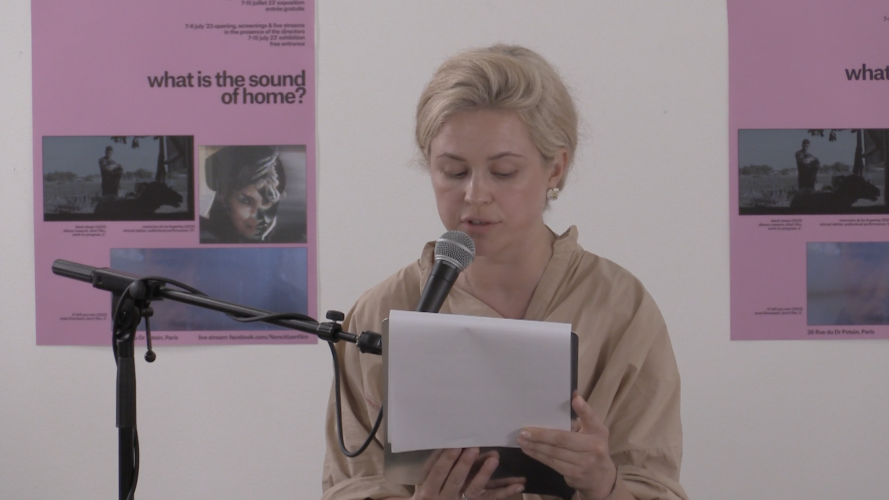
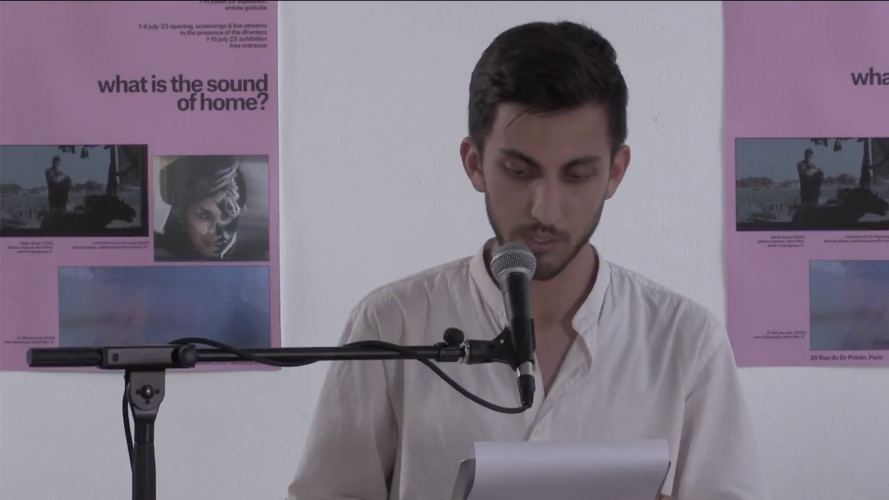
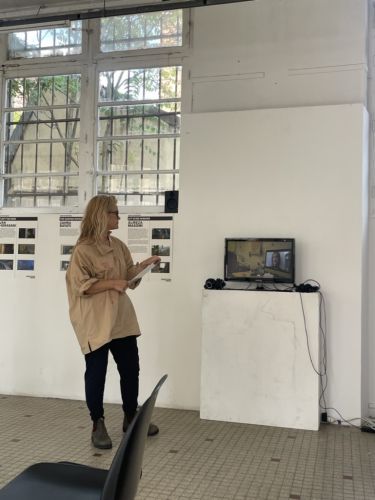
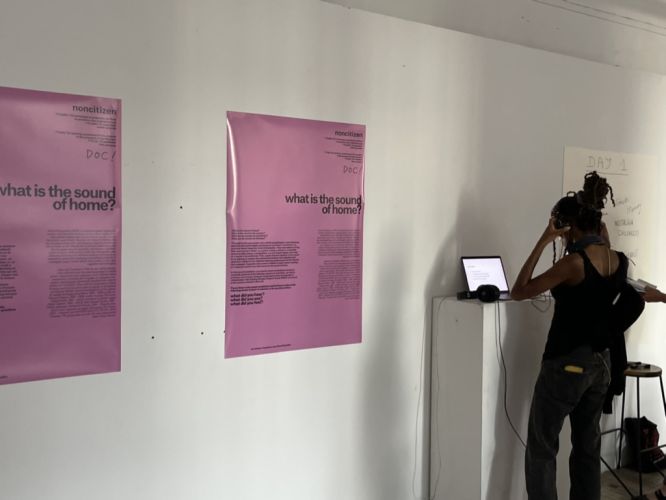
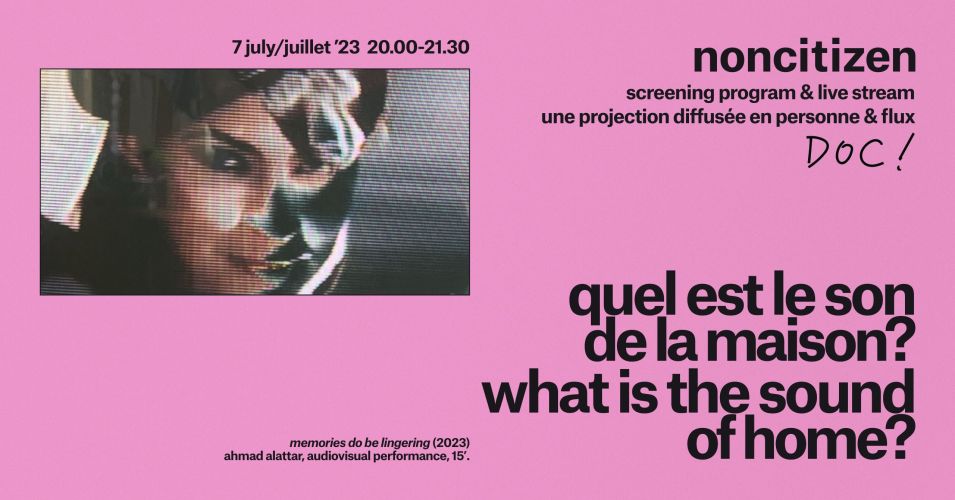
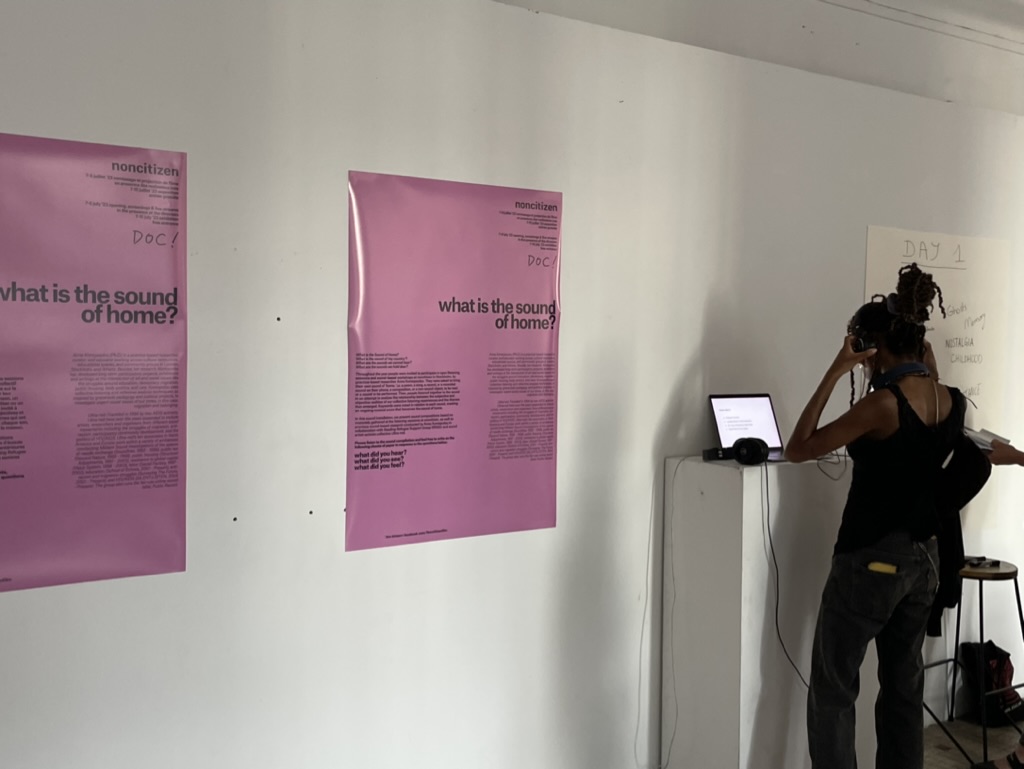
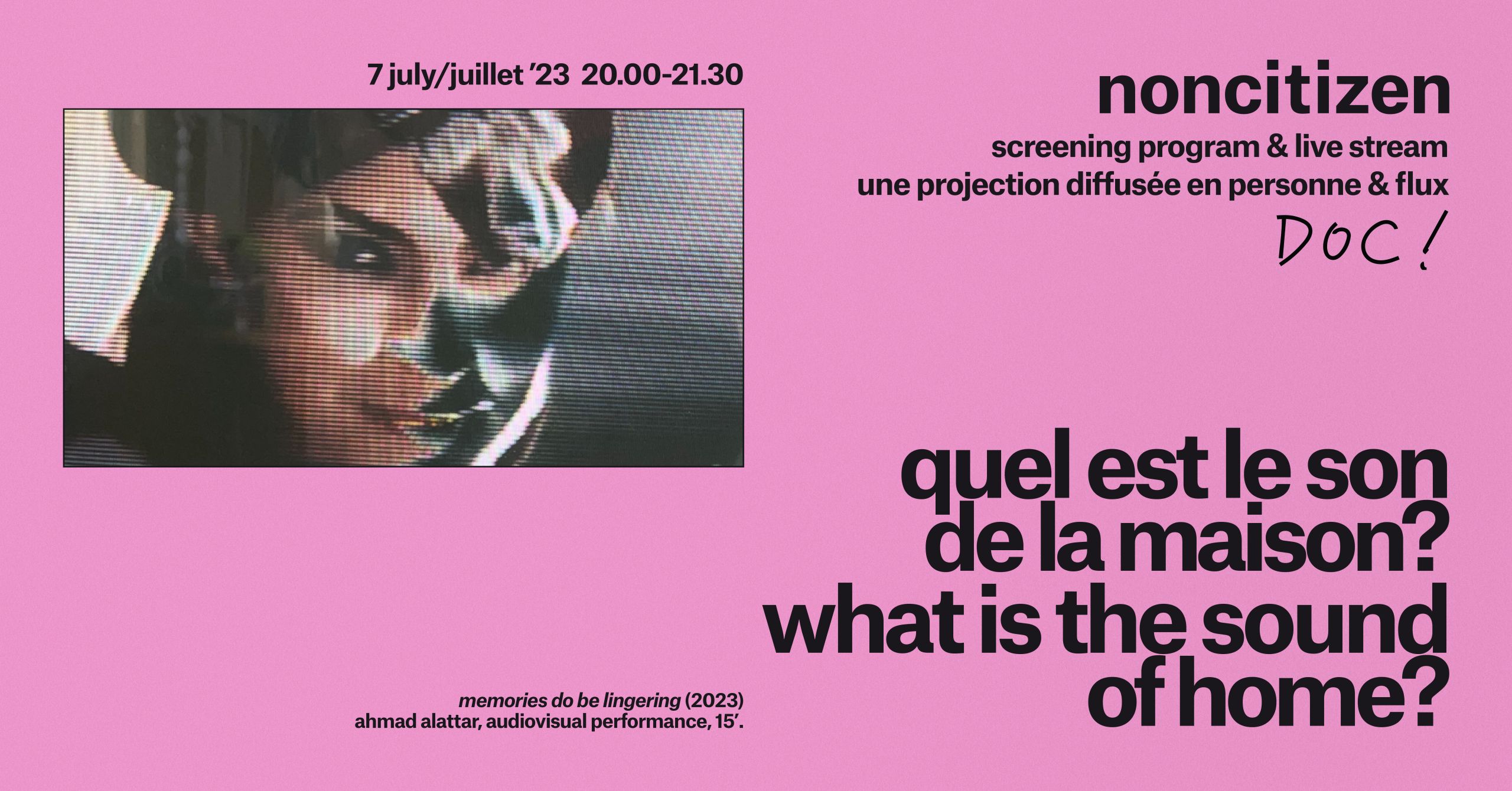
What Is the Sound of Home? aims to attune us not to spectacular border crises but to the lower frequencies of sociality, solidarity, and complicity where stories are quiet, muted, or just a brief whisper felt in the gut. The title is taken from practice-based researcher Anna Kontopoulou’s open listening sessions and workshops for noncitizen, that took place throughout last year. People were invited to bring their own sounds of “home” – poems, songs, records, compositions, phone sound recordings, texts to be read, or sounds to be performed. Together they listened and tried to understand the relationship between the subjective and objective realities of their collective listening experiences and the themes that emerged. Above all, they tried to figure out what a home is. Similarly, in this two-day program of screenings and conversations in Paris, we invite you to listen and respond to intimate stories of displacement and homemaking. We invite you to hear of border transgressions without suspicion – to build new connections and affinities of sonic worlds that radically transform the life-world shaped by nation-states.
_____
* Complicity in French (complicité) also has another valence, closer to connivance and communion. “Créer une complicité” means to build an affinity; “moment de complicité” means a “shared moment.” It is in this sense that the Martiniquan philosopher Édouard Glissant called for a “relational complicity” (complicité relationnelle). In this exhibition, noncitizen weaves together both the literal sense of complicity (like smuggling someone over the border, risking prison time) with complicity as the sharing of an affinity or (under)commons and the creation of new relations. Following Glissant’s notion of complicité, complicit listening would mean a kind of intuitive, non-verbal way of forming relations – unexpectedly and not according to pregiven coordinates or identities.